

How to Budget and Plan for a Family Vacation: 5 Practical Steps

We believe summer is the perfect time to make memories, take a break from the daily grind, and enjoy quality time with your loved ones. But without the right planning, a family vacation can become more stressful than relaxing.
In this post, we break down a simple, step-by-step process to help you plan a fun and budget-conscious trip that the whole family will enjoy.
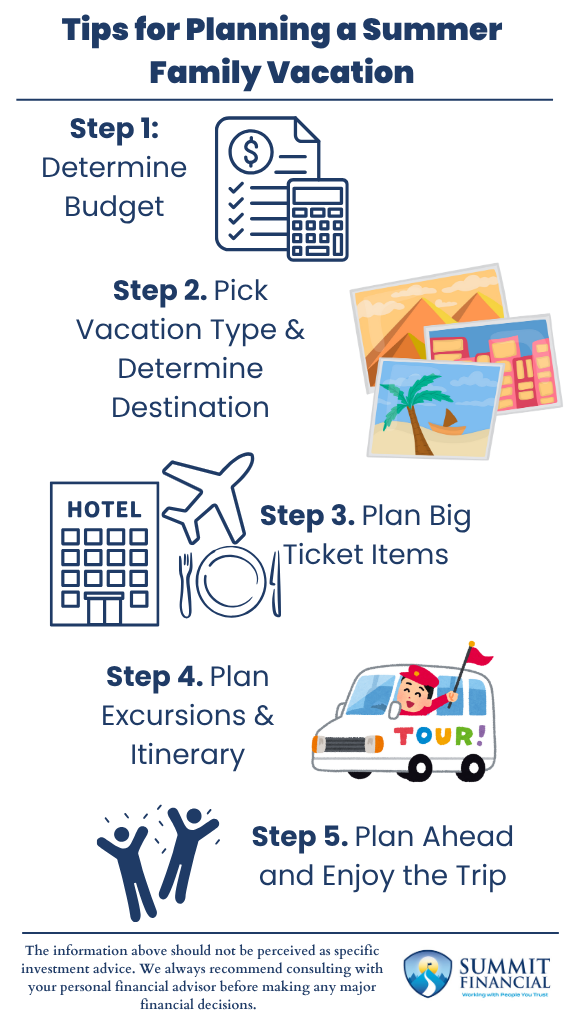
Step 1: Determine Your Budget
The first step is determining the budget for the trip you are planning. Based on your overall household budget for the year, decide how much of the “Vacation” category will be committed to a summer vacation.
This decision may be influenced by other vacation obligations, such as visiting family members, participating in sports, or attending school trips, or by other existing travel plans. We believe families should have an annual travel budget decided in advance, and this amount should be divided among all the trips taken that year.
If your family goes to visit grandparents in the fall or takes a family ski trip every winter, this may impact how much can be spent on a summer vacation.
Need help getting started? Check out these related articles:
Step 2: Choose the Vacation Type and Destination
Once you’ve set a budget, the next step is deciding what kind of vacation you want and where you’d like to go.
Different vacation types come with different costs. For example:
- A camping trip might include campsite fees, groceries, and simple local activities.
- A Disney trip could require a larger budget for park passes and lodging.
- A beach week or a city stay will vary based on accommodations and planned outings.
Also consider the length of the trip and the ages of your family members, as these details often determine what’s realistic, enjoyable, and within your budget.
Once you’ve chosen the type of vacation that fits your family’s needs, you can begin narrowing down potential destinations. Do you already have a favorite beach, campground, or city in mind? Is there somewhere new you’ve been wanting to explore?
Working through these foundational questions provides a solid framework for planning the rest of your trip.
Step 3: Plan the Big-Ticket Items
Once you’ve selected your vacation type and destination, it’s time to identify the major expenses, typically lodging, transportation, and meals.
Lodging might include:
- A tent at a campsite
- A rental home through Airbnb
- A hotel or resort stay
Transportation could involve:
- A road trip if the destination is within driving distance
- Airfare if you’re traveling farther away
Airline tickets often account for a significant portion of the vacation budget, so be sure to plan for them well in advance.
Meals are another key budget item.
If your lodging includes a kitchen, you can save money by buying groceries and cooking some meals. If not, dining out will likely account for a larger share of your daily expenses. A mix of restaurant meals and grab-and-go options can help strike a balance between convenience and cost.
If cooking isn’t an option, be sure to allocate a larger portion of your budget for meals to avoid surprises later on.
Step 4: Plan Excursions and Daily Activities
Once the basics are covered, the next step is to plan daily activities and excursions. Your itinerary doesn’t have to be packed or rigid, but having a few scheduled outings can help reduce stress, especially when traveling with kids.
Ask yourself:
- Will you be visiting a beach? Consider how to add variety to keep kids entertained.
- Are there any major attractions or local spots you don’t want to miss?
- Do you need to purchase tickets in advance or make reservations?
We believe it may be wise to plan a few backup options in case your primary choices fall through due to weather, timing, or limited availability.
If you can buy tickets, then this would solidify your itinerary for that specific day. While this reduces the flexibility of the trip, it ensures you can attend to any top-priority items. Buying tickets or making reservations for excursions is one way to add structure to a trip and helps ensure certain activities are performed at specific times.
Step 5: Put the Plan Into Action and Stay Flexible
Once everything is planned, it’s time to enjoy your trip! As always, travel plans can be interrupted by many things, and these disruptions can be aggravating at times.
We believe it is best to plan ahead as much as possible to avoid potential issues.
For example, before you leave:
- Create a packing list to ensure that nothing important is left behind.
- Outline your travel day schedule, including wake-up times, departure windows, and estimated arrival times.
When issues do arise, try your best to manage them and continue with your vacation. Becoming frustrated will only spoil the trip for others, so we recommend staying calm and accepting the fact that not everything will go as planned.
Especially when travelling with children, things may happen outside of your control. The biggest priority is ensuring that everyone has a fun and safe trip, even if it doesn’t follow all of your initial plans.
Speak With a Trusted Advisor
If you have any questions about your investment portfolio, retirement planning, tax strategies, our 401(k) recommendation service, or other general questions, please give our office a call at (586) 226-2100. Please feel free to forward this commentary to a friend, family member, or co-worker. If you have had any changes to your income, job, family, health insurance, risk tolerance, or your overall financial situation, please give us a call so we can discuss it.
We hope you learned something today. If you have any feedback or suggestions, we would love to hear them.
Sincerely,
Zachary A. Bachner, CFP®
with contributions from Robert Wink, Kenneth Wink and James Wink
Sources:
**
Zach Bachner
After graduating from Central Michigan University in 2017 with specialized degrees in Finance and Personal Financial Planning, Zachary “Zach” Bachner set himself apart by earning the CFP® designation and passing the Series 7, 63, 65 licensing exams early in his career. Zach gained valuable real-world experience with the team at Summit Financial Consulting, who treated him like family. Their guidance helped him refine his skills in practical, client-centered planning, where putting their needs first was non-negotiable. This focus on trust-building not only allowed him to cultivate strong relationships, but also allowed him to continue doing what he loves most: solving client problems through efficient financial planning strategies. Leveraging his experience, Zach now helps others navigate finances through clear, informative writing. His work has been published in major outlets like Yahoo Finance, MarketWatch, and Investment Business Daily, establishing him as a valued resource. By simplifying complex topics, Zach aims to empower everyday people to confidently pursue their financial goals