
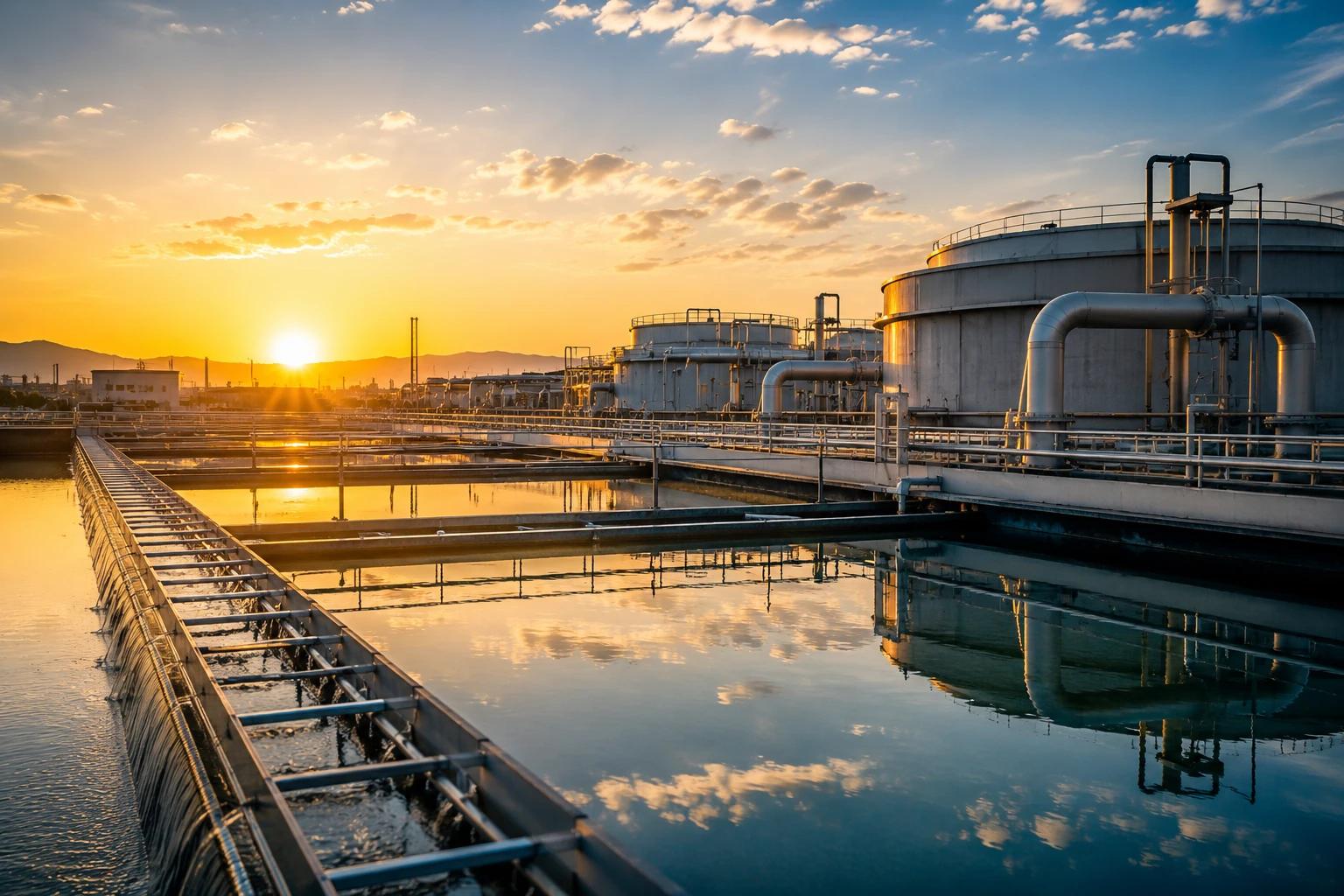
Global Water Infrastructure: Investment Opportunities and Long-Term Outlook

As 2026 progresses, water infrastructure has emerged as a strategically important sector in the global economy. Access to clean and reliable water is no longer viewed solely as a public utility issue but increasingly as a major economic and geopolitical concern.
Aging infrastructure, rising industrial demand, and climate-related disruptions have placed enormous pressure on water systems across both developed and emerging markets (UN WWAP, 2024); (World Bank, 2023).
This growing strain has triggered a wave of investment into water-related industries. Governments, institutional investors, and private companies are allocating significant capital toward pipeline upgrades, desalination projects, wastewater treatment, and water efficiency technologies (OECD, 2024); (McKinsey & Company, 2023). As a result, the global water industry has become an increasingly important focus within infrastructure and long-term investment strategies.
Despite this strong momentum, the future growth trajectory of water-related investments remains uncertain. While structural demand appears durable, economic cycles, regulatory challenges, and technological developments could limit the pace of long-term expansion.
Understanding these dynamics is essential for investors, policymakers, and industries tied to global infrastructure development.
Drivers of Global Water Infrastructure Demand
Demand for water infrastructure continues to grow due to several major global trends. One of the most important drivers is the deterioration of existing systems. In many developed economies, pipelines, treatment facilities, and reservoirs were built decades ago and now require extensive modernization (OECD, 2024).
Droughts and other extreme weather events have placed additional pressure on freshwater supplies (World Bank, 2023); (International Energy Agency [IEA], 2024). In response, governments are investing in desalination plants, water recycling systems, and advanced storage infrastructure to improve long-term resilience (UN WWAP, 2024).
Industrial demand further supports growth in the sector. Semiconductor manufacturing, energy production, agriculture, and data centers all require massive amounts of water (McKinsey & Company, 2023).
As these industries expand globally, the need for efficient and reliable water systems is expected to increase substantially.
Recent Investment Trends in the Water Sector
In recent years, water-related investments have attracted growing attention from institutional investors and infrastructure funds (McKinsey & Company, 2023).
- Utility companies, engineering firms, and water technology providers have benefited from rising capital expenditures and favorable long-term demand expectations.
- Public policy has also played a major role. Governments around the world have introduced infrastructure spending programs aimed at improving water quality and strengthening aging systems (OECD, 2024); (World Bank, 2023). These initiatives have helped accelerate investment activity across both public and private markets.
At the same time, the sector has experienced periods of volatility. Water infrastructure projects often involve long timelines, heavy regulation, and political oversight (OECD, 2024).
Changes in government policy, interest rates, or public opposition can significantly affect project profitability and investor sentiment. While current conditions support continued expansion, these risks highlight the complexity of the industry.
Why Water Infrastructure Growth May Slow Over Time
Although the long-term outlook for water infrastructure may remain positive, several factors could limit future investment growth and market performance.
- Interest Rate Sensitivity: Infrastructure investment tends to be highly sensitive to interest rates and borrowing costs. Large-scale projects often require substantial financing, and higher interest rates can reduce profitability while slowing new development activity (McKinsey & Company, 2023). This could weaken investment momentum during periods of tighter monetary policy.
- Political and Regulatory Constraints: Water is considered an essential public resource, meaning governments frequently impose pricing controls or strict regulations on private operators (OECD, 2024). As concerns about affordability increase, policymakers may prioritize public access over investor profitability.
- Technological Innovation: Technological advancements could alter the competitive landscape. Improvements in water efficiency, recycling systems, and industrial conservation may reduce long-term consumption growth in some sectors (UN WWAP, 2024). While innovation creates opportunities, it can also limit the need for large-scale infrastructure expansion over time.
- Demographic and Macroeconomic Headwinds: Broader demographic and macroeconomic trends may contribute to slower growth. Aging populations in many developed economies may reduce overall infrastructure spending priorities while slowing industrial expansion and construction activity (World Bank, 2023). In addition, slower economic growth could reduce demand for major capital-intensive projects across both public and private sectors.
While these pressures may not reverse the long-term importance of water infrastructure, they suggest that future growth is unlikely to remain consistently rapid or uninterrupted.
What the Water Sector Outlook Means for Investors
Water infrastructure is likely to remain one of the most important long-term sectors within the global economy. Rising demand, climate-related challenges, and aging systems continue to support substantial investment across utilities, treatment technologies, and industrial infrastructure (UN WWAP, 2024); (OECD, 2024).
However, it is unlikely that investment growth or market performance will continue indefinitely without setbacks. Economic cycles, regulatory constraints, technological adaptation, and broader demographic shifts are all likely to shape the sector's long-term trajectory (World Bank, 2023); (McKinsey & Company, 2023).
Ultimately, the water industry reflects the balance between essential global demand and the financial realities of large-scale infrastructure investment. While the long-term outlook remains constructive, a more balanced expectation, characterized by steady growth alongside periods of volatility and policy-driven uncertainty, provides a more realistic view of the sector's future.
Global Water Infrastructure Key Takeaways
- Aging infrastructure, climate challenges, and growing industrial demand are driving significant investment in water systems worldwide.
- Water-related investments span utilities, treatment technologies, desalination projects, and infrastructure modernization efforts.
- Long-term opportunities remain attractive, but regulatory oversight, interest rates, and economic conditions may influence future returns.
- Investors should view water infrastructure as a long-term theme rather than a short-term market trend
Questions About Your Investment Strategy?
If you have any questions about your investment portfolio, retirement planning, tax strategies, our 401(k) recommendation service, or other general questions, please give our office a call at (586) 226-2100.
Please feel free to suggest this blog post to a friend, family member, or co-worker. If you have had any changes to your income, job, family, health insurance, risk tolerance, or your overall financial situation, please give us a call so we can discuss it.
We hope you learned something today. If you have any feedback or suggestions, we would love to hear them.
Best Regards,
Daniel A. Ladzinski, CRPC®, AWMA®
with contributions by Robert L. Wink, Kenneth R. Wink, James D. Wink, Zachary A. Bachner, CFP®, and James C. Baldwin.
Disclaimer: This material is provided for informational and educational purposes only and should not be construed as investment, tax, or legal advice. Investing involves risk, including possible loss of principal. Past performance does not guarantee future results. Individuals should consult with a qualified financial professional before making financial decisions.
Daniel Ladzinski
A financial advisor at Summit Financial Consulting, Daniel graduated summa cum laude from Hillsdale College with a B.S. in Financial Management and Applied Mathematics in 2024. He has obtained several licenses, including the Series 7, Series 63, Series 65, Variable Life and Annuity Contracts, as well as Life, Health & Accident Insurance. Daniel has experience in several wealth management companies in the surrounding area. Each of these positions helped solidify his desire to serve clients and utilize his background in mathematics to pursue optimal financial plans. During his time in college, Daniel honed his analytical skills through active participation in the Hillsdale College Applied Mathematics Club. His strong interest in personal investing led him to develop specialized watchlists, alerts, and strategies, demonstrating his ability to create data-driven solutions. Among his many hobbies, Daniel is an avid multi-instrumentalist. He led the Hillsdale College Big Band on the saxophone, and he is currently delving into the music community of metro Detroit. He is also passionate about soccer, volleyball, disc golf, botany, numismatics, and, most importantly, his Catholic faith, family, and friends.
Sources
- Organization for Economic Co-operation and Development (OECD) - Financing Water Supply, Sanitation and Flood Protection
- United Nations World Water Assessment Programme (UN WWAP) - Water Development Report 2024
- World Bank - Water Security and Climate Adaptation
- McKinsey & Company - Global Infrastructure Investment and Water Systems
- International Energy Agency (IEA) - Climate Resilience and Critical Infrastructure